
Author: Sebastian Feimblatt

Ocean Oasis advances commercial pathway for offshore wave-powered desalination as institutional engagement deepens in the Canary Islands 

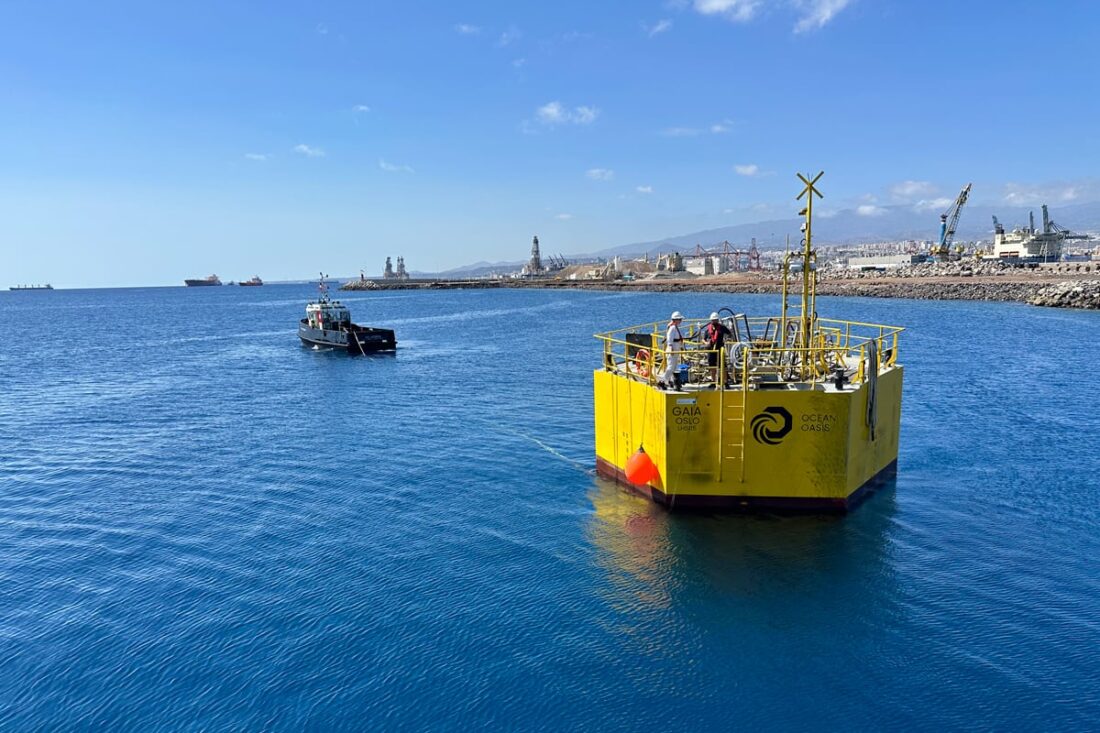
Ocean Oasis is advancing toward the commercialisation of offshore, wave-powered desalination, with the Canary Islands consolidating their role as a reference region for early municipal assessment and potential adoption. Following full-scale offshore validation, the company is deploying a first fleet of offshore desalination buoys delivering fresh water to the Arucas–Moya desalination plant in Gran Canaria under the EU-funded DesaLIFE project. In parallel, Ocean Oasis is working with public authorities to evaluate how the technology could be integrated into existing water systems.

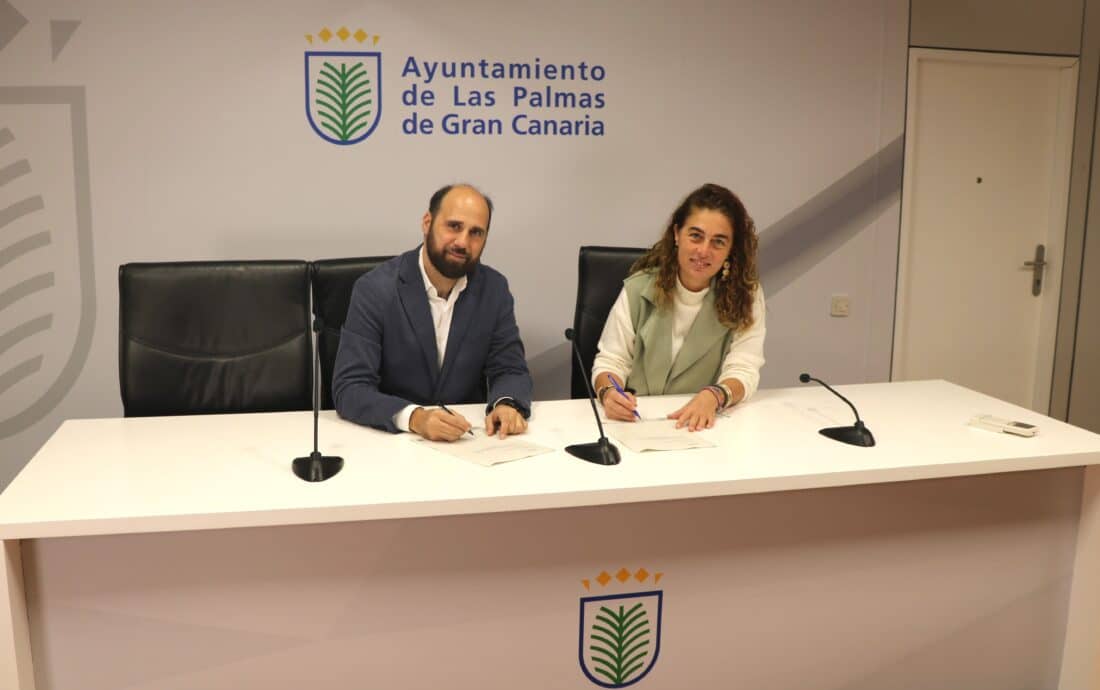
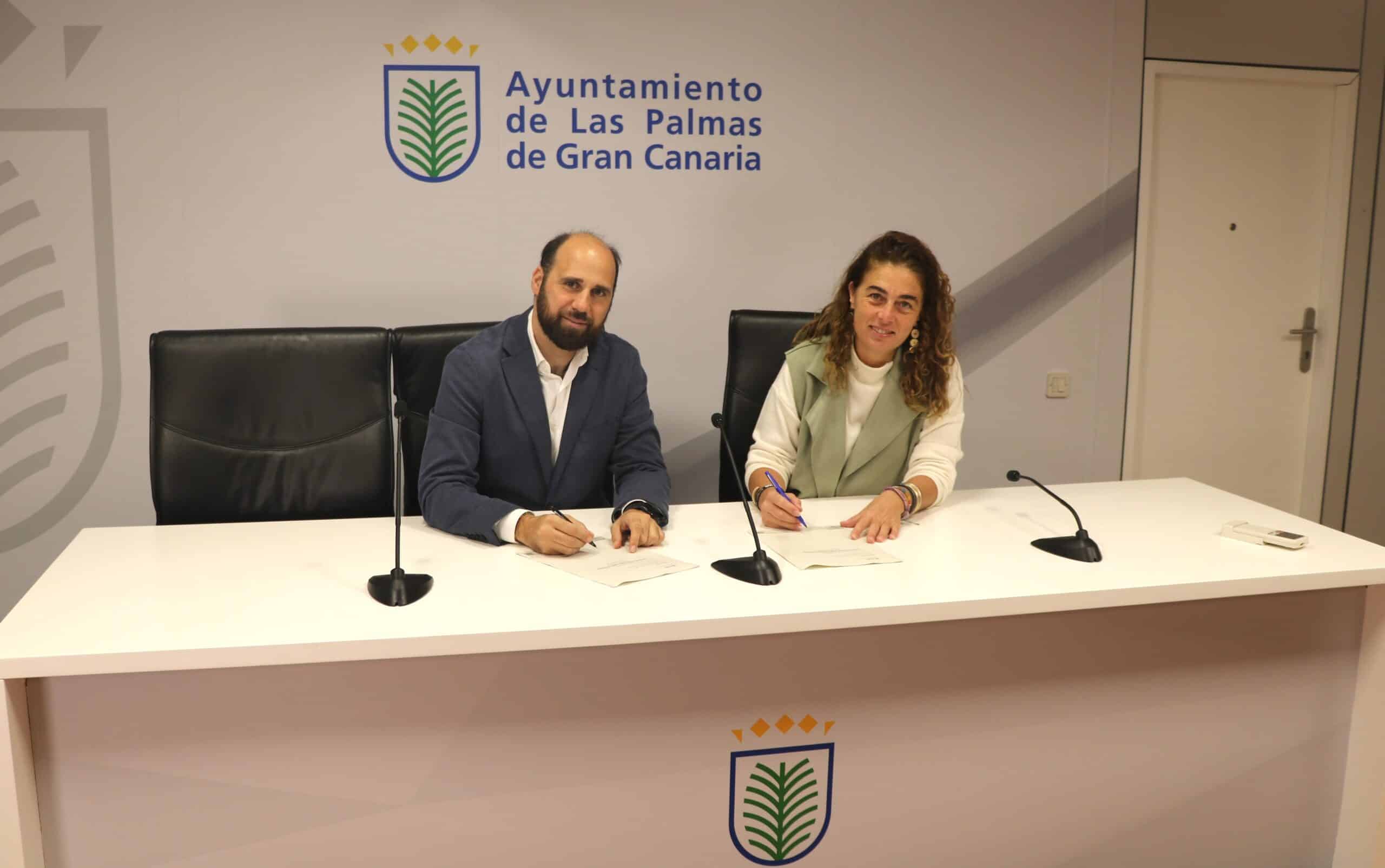
As part of this phased commercial pathway, the City Council of Las Palmas de Gran Canaria and Ocean Oasis have signed a Memorandum of Understanding (MoU) to jointly assess the feasibility of offshore wave-powered desalination at several locations along the municipality’s coastline. The agreement, conducted within the DesaLIFE project, establishes a structured framework to evaluate the technical, environmental, economic, and regulatory conditions for the potential municipal integration of offshore desalination capacity.

The MoU represents a formal de-risking step as Ocean Oasis moves from offshore technology validation toward municipality-scale application, ensuring that any future considerations are grounded in rigorous technical analysis and institutional alignment.

During the signing ceremony, the Councillor for Strategic Development, Sustainability and Energy, Ms. Gemma Martínez-Soliño, highlighted the broader relevance of the initiative:

“Harnessing innovation developed in the Canary Islands to address sustainability, clean energy, and water resilience is essential. This collaboration positions Las Palmas de Gran Canaria at the forefront of forward-looking solutions for urban water security.”

Sebastian Feimblatt, Co-Founder and Co-CEO of Ocean Oasis, emphasised the importance of public-sector engagement at this stage of development:

“The commercialisation of new water infrastructure technologies depends on close collaboration with public authorities. This MoU reflects growing institutional interest in assessing offshore wave-powered desalination following full-scale offshore validation.”


Together, Ocean Oasis’s full-scale offshore validation, the deployment under the DesaLIFE project, and the MoU with Las Palmas de Gran Canaria advance the company’s commercialisation strategy—progressing from validated technology toward assessed, municipality-level integration, supported by structured public-sector collaboration and growing institutional interest.
 

Background and Context

Offshore Desalination and Water System Resilience

Desalination is a structural component of water supply in Las Palmas de Gran Canaria and across the Canary Islands. At the same time, conventional large-scale desalination is among the most energy-intensive elements of the urban water cycle, relying on continuous grid electricity and exposing water supply to energy price volatility, emissions constraints, and system-wide disruptions.

Offshore wave-powered desalination is being assessed as a complementary infrastructure approach. By decoupling freshwater production from grid electricity and fossil-fuel-linked energy inputs, autonomous offshore systems may contribute to long-term supply resilience and reduced exposure to energy-related risks.

Ocean Oasis Technology

Ocean Oasis has developed an offshore desalination system based on modular floating buoys that use the natural motion of ocean waves to generate direct mechanical pressure for desalination. The technology operates without electricity, fuels, or CO₂ emissions and has been validated at full scale in offshore conditions.

Key characteristics include fully renewable, off-grid operation; minimal environmental footprint; modular and scalable architecture enabling phased deployment; and decentralised freshwater production that strengthens system resilience. The technology is particularly suited to island and coastal regions where desalination is a permanent element of water supply and where energy efficiency, emissions reduction, and operational robustness are increasingly decisive.

DesaLIFE and Consortium Partners

The feasibility assessment with Las Palmas de Gran Canaria is conducted within DesaLIFE, a project led by Ocean Oasis under the EU LIFE Programme and managed by the European Climate, Infrastructure and Environment Executive Agency (CINEA).

DesaLIFE includes the deployment of offshore wave-powered desalination capacity integrated with the Arucas–Moya water desalination plant in Gran Canaria and is structured as a replication-oriented framework. In parallel, Ocean Oasis is advancing similar assessments in other Canary Islands municipalities, adapted to local conditions.

In recognition of its strategic relevance and replication potential, DesaLIFE has been formally declared a Project of Strategic Interest by the Government of the Canary Islands, enabling coordinated inter-administrative engagement and a structured pathway for assessment and potential replication across the archipelago.

Execution of DesaLIFE is supported by a coordinated consortium of leading Canary Islands institutions:

GRRES – Renewable Energy Systems Research Group, University of Las Palmas de Gran Canaria, contributing expertise in renewable energy integration, modelling, and applied research.

The Canary Islands Institute of Technology (ITC), a public technology body of the Regional Government of the Canary Islands, providing extensive capabilities in desalination technologies, water–energy systems, and sustainable innovation.

Elittoral, an experienced international coastal and environmental consultancy, responsible for advanced marine monitoring, data analysis, and environmental impact assessment.

PLOCAN – the Oceanic Platform of the Canary Islands, offering one of Europe’s most advanced infrastructures for ocean-based testing, demonstration, and validation of marine technologies.

Ocean Oasis, as technology specialist and project lead, coordinating technical development, regulatory engagement, and system integration across the full scope of the project.


Link to the press release

Feb 02, 2026

Ocean Oasis project recognized as Strategic Project for the Canary Islands

Oslo, 15 October 2025

The President of the Canary Islands, Mr. Fernando Clavijo Batlle, has officially declared DesaLIFE, led by Ocean Oasis, as a Strategic Project for the Canary Islands, alongside 18 other initiatives. The recognition follows its classification by the Directorate-General for Organisational Coordination and Strategic Projects of the Government of the Canary Islands as “a highly innovative and sustainable project, with strong strategic relevance and proven technical feasibility.

This milestone marks a new chapter for Ocean Oasis, confirming the company’s technology as a key enabler for the Canary Islands’ long-term sustainability goals. DesaLIFE directly contributes to the Government’s priority areas — sustainability, blue economy, energy, health and wellbeing, vocational training, and emerging industries — and aligns with the Canary Islands Agenda 2030 and the Smart Specialization Strategy (Extended RIS3).

A major step for Ocean Oasis and the future of water

DesaLIFE represents the transition of Ocean Oasis from validated innovation to industrial deployment. With an overall budget of approximately €10 million, co-funded by the EU LIFE Programme (through CINEA, under the Circular Economy and Quality of Life sub-programme), the project will deliver the first industrial-scale desalination buoy powered entirely by wave energy.

Led by Ocean Oasis, the consortium includes the Canary Islands Institute of Technology (ITC), Plataforma Oceánica de Canarias (PLOCAN), the University of Las Palmas de Gran Canaria (ULPGC), elittoral, and the Water Council of Gran Canaria (CIAGC) — bringing together regional excellence in ocean technology, environmental monitoring, and policy alignment.

From validation to industrial scale

Ocean Oasis has developed a breakthrough solution that produces freshwater offshore at a competitive cost, using only wave energy — no grid connection, no fossil fuels, and zero emissions. In each buoy, wave power is used to pressurize seawater and drive it through a standard reverse osmosis desalination system, delivering freshwater to shore via flexible pipelines that connect to existing island networks.

The company previously validated its technology under the EU EIC Accelerator ReWater project, documenting performance and reliability at full scale. Under DesaLIFE, Ocean Oasis will now move into production and deployment, enabling 2,000 m³/day of freshwater — equivalent to the daily consumption of around 15,000 people.

Industrial rollout in the Canary Islands

The first industrial-scale unit, Theia, will be built locally in the Canary Islands, consolidating Ocean Oasis’s commitment to regional industry and sustainable manufacturing. Theia will serve as the reference for future multi-unit deployments, positioning the Canary Islands as a global testbed for zero-emission desalination and Ocean Oasis as a first mover in offshore water infrastructure.

The designation Strategic Project for the Canary Islands provides preferential administrative processing, accelerated permitting, and access to dedicated advisory services — reinforcing the momentum for Ocean Oasis as it advances towards international expansion.

About Ocean Oasis

Ocean Oasis is a Norwegian company pioneering floating, wave-powered desalination systems that enable sustainable freshwater production offshore. Following successful validation through the EU EIC Accelerator, Ocean Oasis is now scaling its technology with support from the EU LIFE Programme and a growing network of institutional and industrial partners.

The company is currently assembling its next group of investors and strategic partners to accelerate commercial deployment in island and coastal markets worldwide.

Media contact:
sebastian@oceanoasis.co
www.oceanoasis.co
Link to the PDF version of the press release

All rights reserved © Ocean Oasis | Legal Notice | Privacy & Cookie Policy

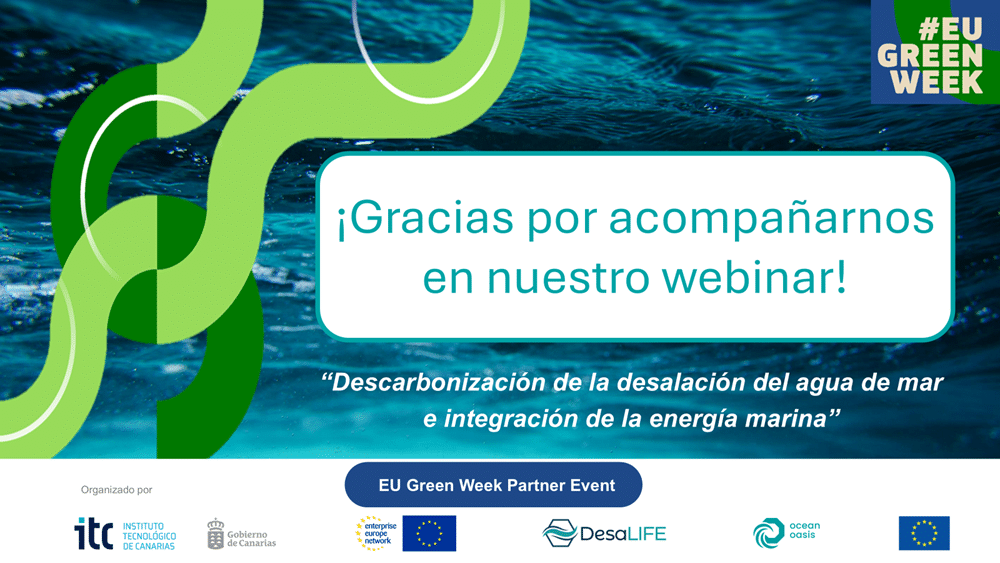
¡Gracias por acompañarnos en nuestro webinar “Descarbonización de la desalación de agua de mar e integración de la energía marina”!

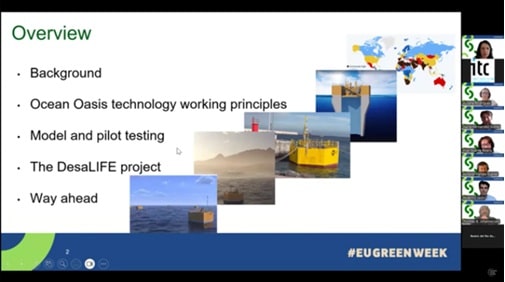
Estamos muy satisfechos con el éxito de este evento asociado a la Semana Verde Europea, que reunió a decenas de participantes y confirmó el creciente interés por soluciones sostenibles y por la incorporación de energías renovables en los procesos de desalación, tanto a nivel local como regional, haciendo mayor hincapié en la energía de las olas (undimotriz) en Canarias. 

La Semana Verde Europea, organizada anualmente por la Comisión Europea desde hace 25 años, se ha consolidado como un espacio clave para debatir y promover políticas ambientales, así como para impulsar la transición hacia una economía más circular y sostenible en Europa y sus regiones. 

Queremos expresar nuestro agradecimiento al coorganizador EEN-Canarias por su apoyo, así como a todos los ponentes por sus valiosas contribuciones a esta importante conversación, y a AEDyR por su participación especial. 

Si quieres profundizar en este tema y descubrir cómo el proyecto DesaLIFE está promoviendo la sostenibilidad en la desalación en Canarias, no te pierdas el vídeo completo del webinar en el siguiente enlace: 👉 https://www.youtube.com/watch?v=5-Em-tHX5Hk 


EN 

Thank you for joining our webinar “Decarbonization of Seawater Desalination and Integration of Marine Energy”!  

We are very pleased with the success of this EU Green Week Partner Event, which brought together dozens of participants and confirmed the growing interest in sustainable solutions and the integration of renewable energy into desalination processes, with a particular focus on wave energy in the Canary Islands.  

The European Green Week, organized annually by the European Commission for 25 years, has established itself as a key platform for discussing and promoting environmental policies, as well as for driving the transition towards a more circular and sustainable economy across Europe and its regions. 

We would like to express our gratitude to the co-organizer EEN-Canarias for their support, as well as to all the speakers for their valuable contributions to this important conversation, and to AEDyR for their special participation. 

If you want to learn more about this topic and discover how the DesaLIFE project is promoting sustainability in desalination in the Canary Islands, don’t miss the full webinar video here: 👉 https://www.youtube.com/watch?v=5-Em-tHX5Hk 

This project has received funding from the European Union’s Horizont Europe research and innovation programme under the grant agreement no.190150864

All rights reserved © Ocean Oasis | Legal Notice | Privacy & Cookie Policy

DesaLIFE Showcased at ECOS2025

The 38th edition of the International Conference on Efficiency, Cost, Optimization, Simulation, and Environmental Impact of Energy Systems (ECOS) was held in Paris, France, from June 29 to July 4.This annual conference, established in 1985, aims to promote, share, and generate knowledge among engineers, scientists, and policymakers.


The topics covered at ECOS are diverse and include climate change, energy research, and the role of energy in natural resources such as water and air—all with the goal of exchanging perspectives on current and future developments.
Among the papers presented at ECOS2025 were “Energy Analysis of Different Schemes for Humidification-Dehumidification (HDH) Desalination Systems” by P. Ungar, and “A Water Circularity Index for Energy Production Installations” by B. Scalzotto.
Given the relevance of this conference, the project ‘DesaLIFE – Desalination for Sustainability and Life’ was considered an important contribution. 


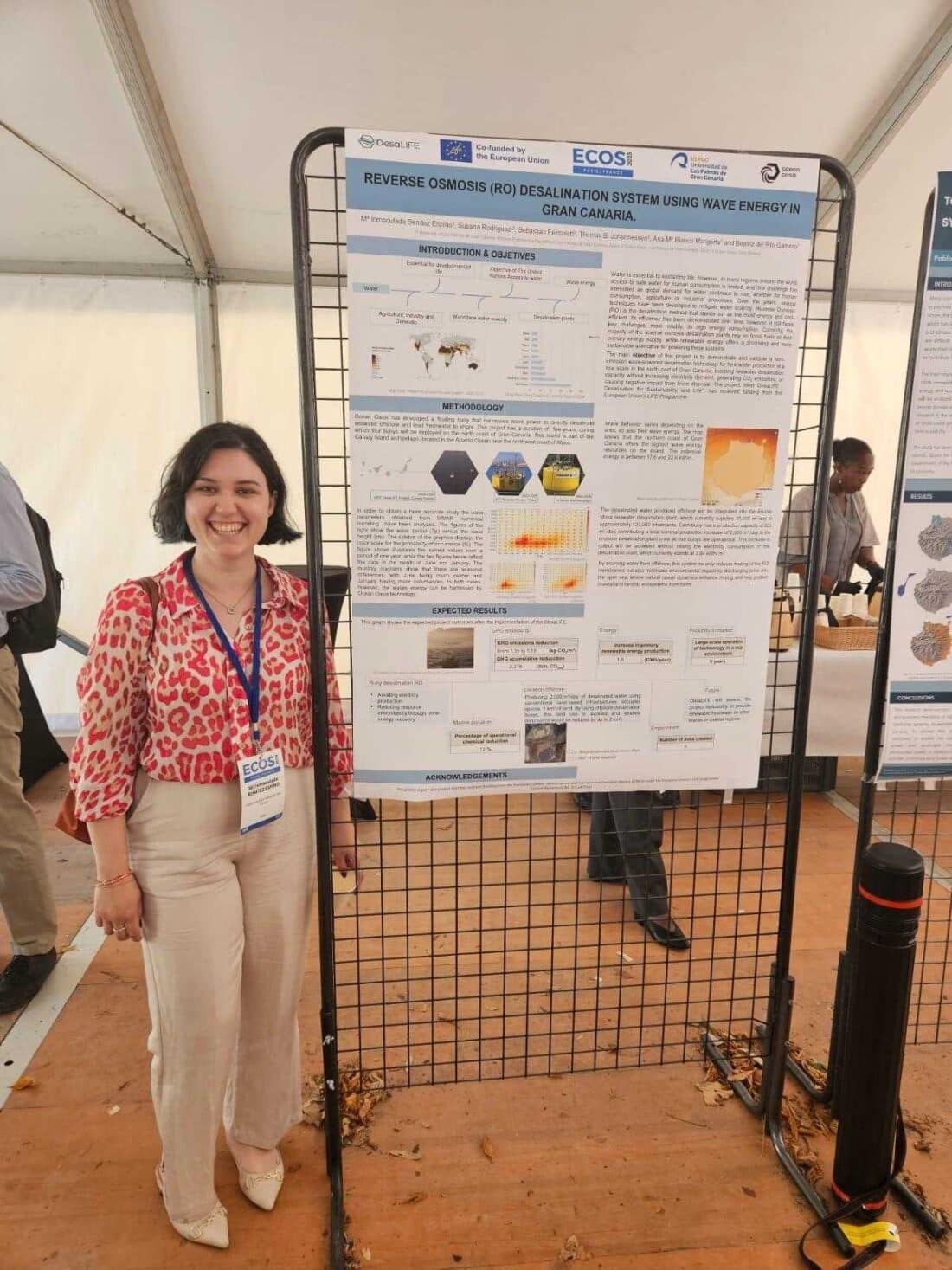
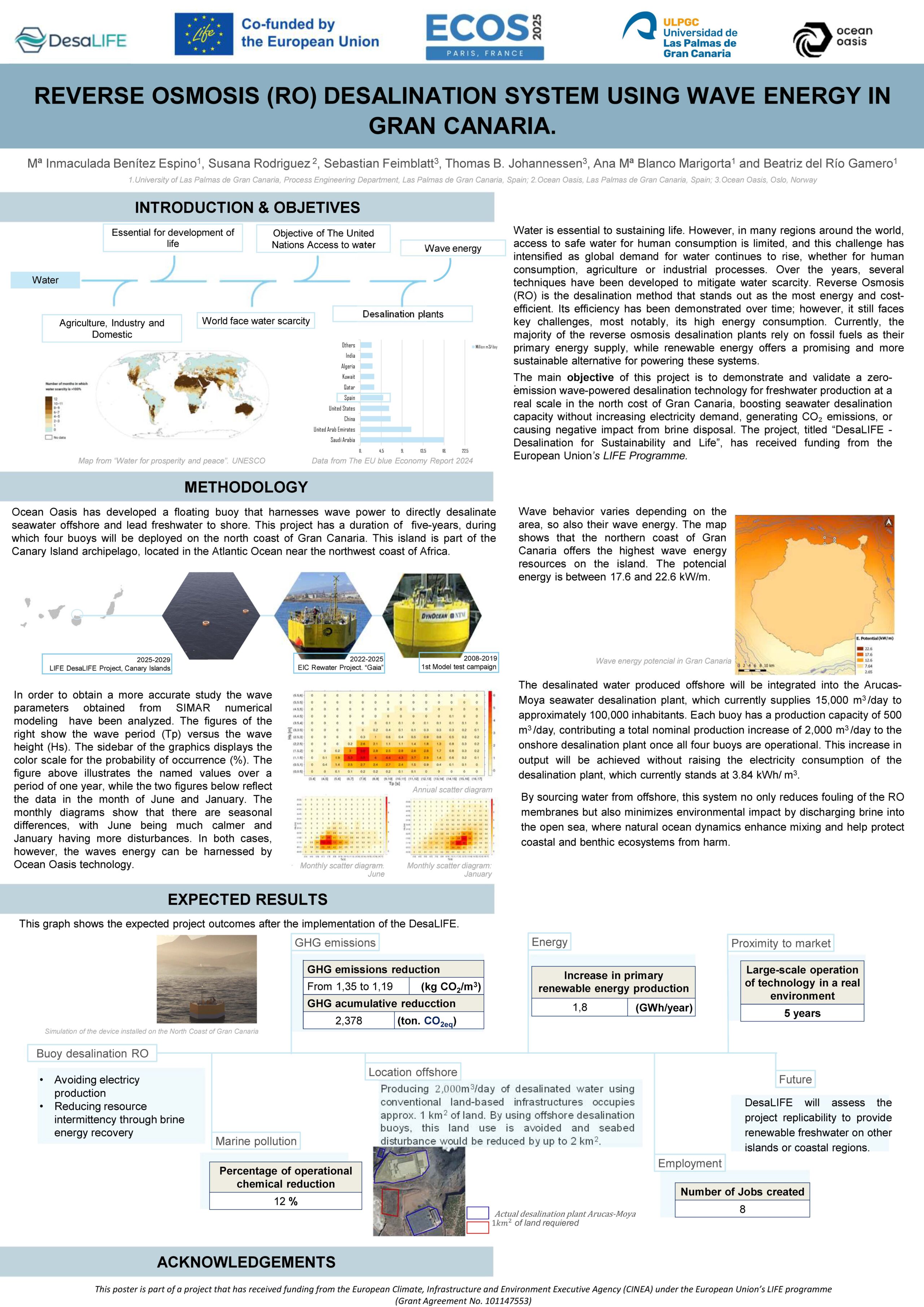
On July 3, two of the six co-authors, Ana Mª Blanco Marigorta and Mª Inmaculada Benítez Espino, presented the project through a poster entitled Reverse Osmosis Desalination System Using Wave Energy in Gran Canaria”.  The objective of the project is to demonstrate and validate a zero-emission wave-powered desalination technology for large-scale freshwater production on the north coast of Gran Canaria.

The project, which aims to increase seawater desalination capacity without raising electricity demand, generating CO₂ emissions, or causing negative impacts from brine discharge, made a strong impression on the ECOS community. Scientists and researchers from various disciplines showed great interest, recognizing the potential of this system to transform the desalination sector.

Authors: Mª Inmaculada Benítez Espino, Susana Rodriguez, Sebastian Feimblatt, Thomas B. Johannessen, Ana Mª Blanco Marigorta and Beatriz del Río Gamero.

Poster presented during the conference

Poster presented

This project has received funding from the European Union’s Horizont Europe research and innovation programme under the grant agreement no.190150864

All rights reserved © Ocean Oasis | Legal Notice | Privacy & Cookie Policy

Launch of the European DesaLIFE Project on Wave-Powered Desalination

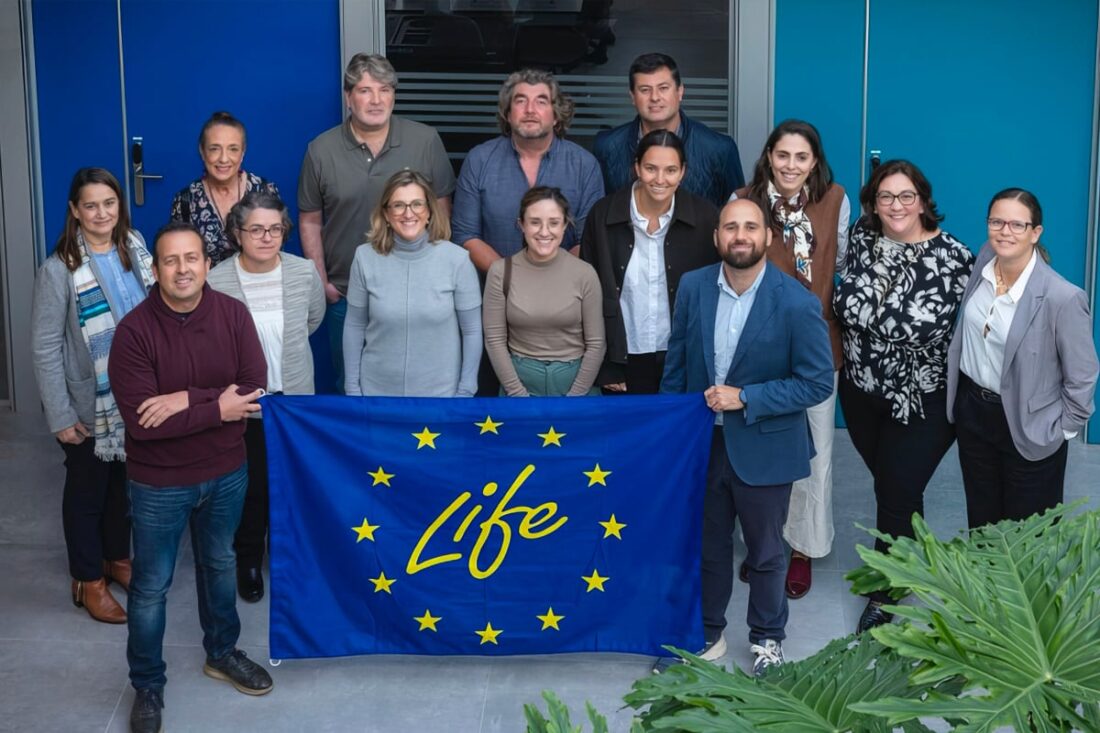
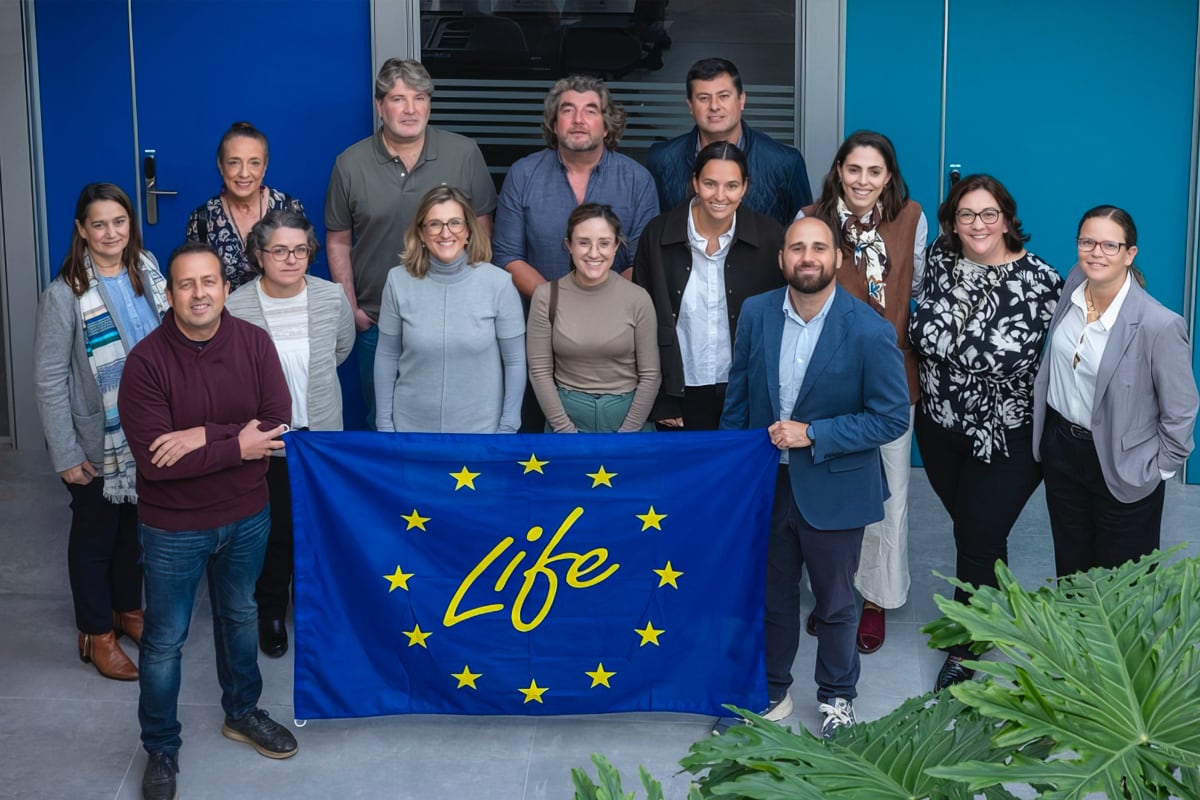
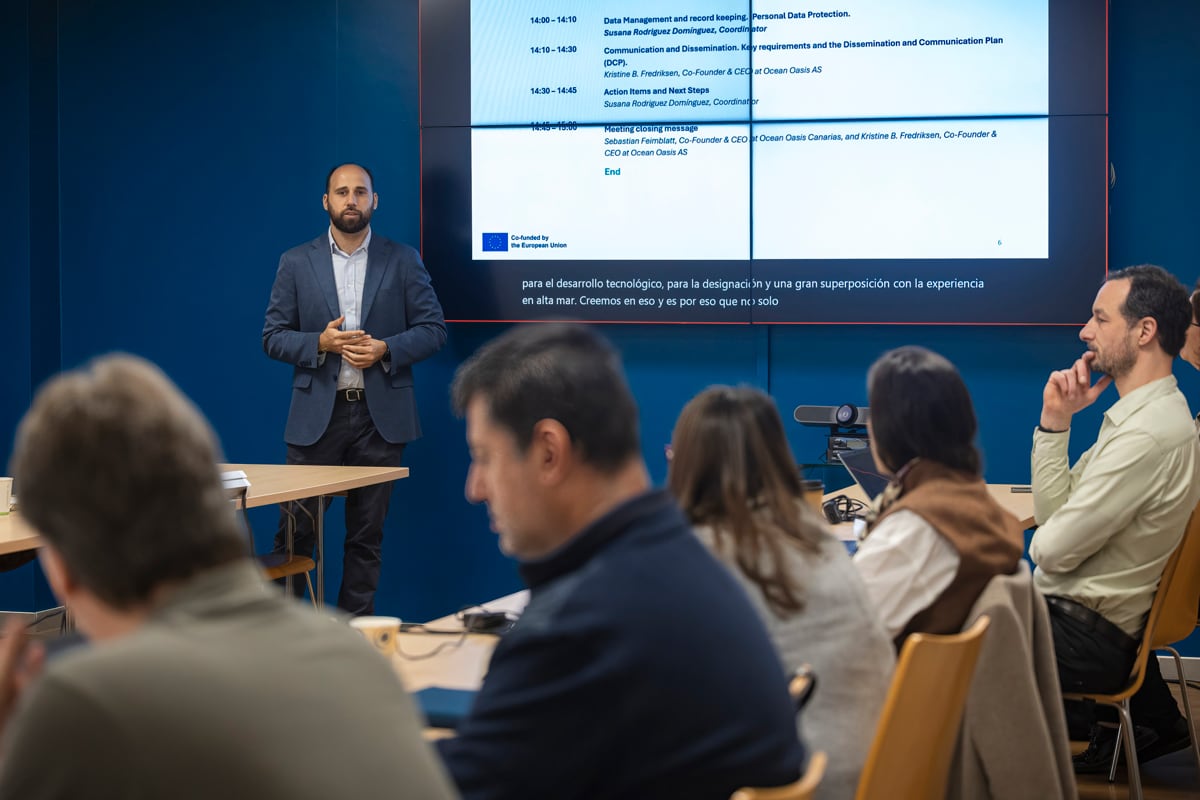
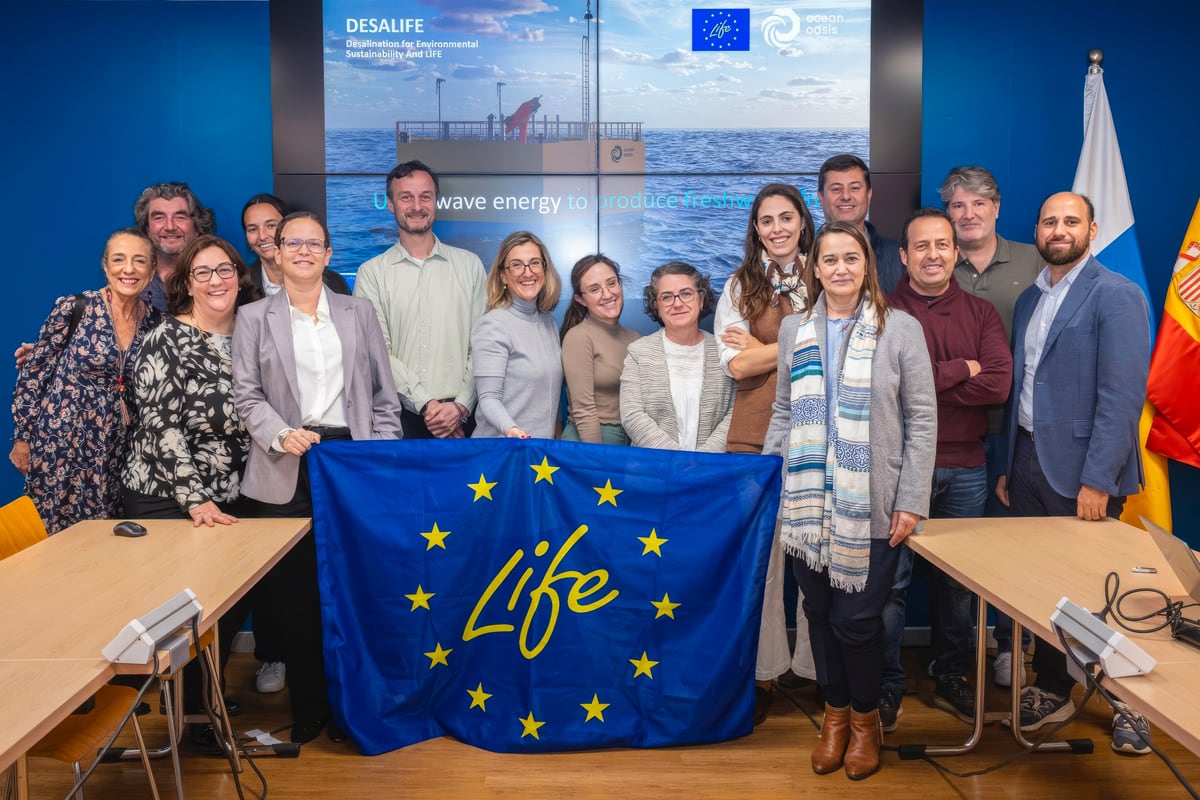
The kick-off meeting of the DesaLIFE project — Desalination for Environmental Sustainability and Life — took place this Thursday at the headquarters of the Oceanic Platform of the Canary Islands (PLOCAN) in Taliarte, Gran Canaria. The meeting, led by the start-up Ocean Oasis Canarias, brought together all project partners: PLOCAN, the Canary Islands Institute of Technology (ITC), the Renewable Energy Systems Research Group (GRRES) of the University of Las Palmas de Gran Canaria (ULPGC), and elittoral, an environmental consultancy specialised in coastal and marine environments. The Island Water Council of Gran Canaria (CIAGC) also took part as an associated entity and operator of the Arucas-Moya desalination plant (EDAM), which will receive the fresh water produced by the project’s desalination buoys, targeting an average annual output of 2,000 m³ per day, equivalent to the water consumption of approximately 15,000 people.

DesaLIFE has an overall budget of approximately €10 million and is co-funded with €5.9 million by the European Climate, Infrastructure and Environment Executive Agency (CINEA) under the Circular Economy and Quality of Life Programme. This event marks the official launch of this European innovation project in the fields of marine energy and desalination, which will run for approximately five years.

José Joaquín Hernández Brito, Director of PLOCAN, highlighted:

“The energy transition in the Canary Islands is urgent, and PLOCAN is fully committed to the DesaLIFE project to promote and accelerate the technologies needed to make it viable from a social, economic, and environmental perspective.”

Sebastián Feimblatt, Co-Founder of Ocean Oasis and CEO of its Canary Islands branch, highlighted “the importance of the institutions that have supported us in the development of this technology since we arrived in the Canary Islands three years ago, and the collaboration of both public and private organisations in advancing this project, which will enable the sustainable desalination of water using wave energy.”

DesaLIFE aims to demonstrate wave-powered desalination as a sustainable and affordable solution to secure the island’s future water supply. In addition, the project will contribute to the local economy by attracting international investment and creating employment opportunities.

This floating technology desalination system uses a reverse osmosis process powered solely by wave energy, eliminating the need for grid electricity and avoiding associated CO₂ emissions.

By harnessing marine energy for desalinated water production, this technology offers a way to expand the capacity of this energy-intensive process through a renewable source, without increasing demand on the electrical grid. It contributes to the decarbonisation of the Canary Islands and enhances their energy independence.

DesaLIFE is based on the technology developed by the Norwegian company Ocean Oasis, which leverages the expertise and know-how of Norway’s offshore industry in its design. This technology has been refined through the GAIA pilot buoy, which has been undergoing testing at the Port of Las Palmas over the past year. DesaLIFE now moves forward to a full-scale pre-commercial phase, with its production connected to the Arucas-Moya desalination plant (EDAM).

DesaLIFE will also assess the replicability of the project to provide renewable freshwater to other islands in the archipelago that likewise need to increase their water production. This initiative aims to ensure that water availability no longer limits the region’s potential, supporting the transition towards a sustainable, energy-efficient, and climate-resilient economy in the Canary Islands.

Jan 22, 2025

Ocean Oasis Presents Key Outcomes from the European ReWater Project

Ocean Oasis presenta los resultados del proyecto Europeo ReWater 

Las Palmas de Gran Canaria, 27 May — Ocean Oasis today presented the progress of the European ReWater project at the headquarters of the Port Authority of Las Palmas. This pioneering initiative promotes sustainable desalination through the exclusive use of wave energy.


Co-funded by the European Union’s Horizon Europe programme (Grant Agreement No. 190150864), the project has enabled the development and validation of the “Gaia” buoy prototype, which produces drinking water offshore without any connection to the power grid and with zero CO₂ emissions. This positions the technology as a viable and clean alternative for water supply in coastal and remote areas.

Technology Validation and a Step Towards Industrialisation

Ocean Oasis presented the technical results achieved after more than two years of development, workshop testing, and open-sea trials, confirming the efficient and stable performance of the wave-powered desalination buoy. This validation marks a key technological milestone, demonstrating the operational feasibility of a fully autonomous solution that transforms wave energy into drinking water.

With this successful demonstration, Ocean Oasis is preparing to enter the industrialisation phase, paving the way for future commercial partnerships, larger-scale deployments, and opportunities for local manufacturing. In addition, the continuation of the pilot buoy’s operations was announced through new collaborations and upcoming R&D calls, extending the project’s impact beyond its current phase.

In this context, the company also highlighted the new DesaLIFE project, co-funded by the European Union’s LIFE programme (Grant Agreement No. 101147553), which will focus on the industrial development of pre-commercial units to be built at the Port of Las Palmas. This further strengthens the Canary Islands’ position as a technological hub for sustainable offshore solutions.


Institutional Backing and Strategic Outlook

Beatriz Calzada, President of the Port Authority of Las Palmas hosted the event,  highlighted Ocean Oasis’s technology as a “strategic solution” for producing drinking water without the need for a grid connection. She also expressed her appreciation for the involvement of local port companies and the Port Authority’s own team in supporting the project’s development.

“The work carried out by Ocean Oasis in our port reinforces the role of the Port of Las Palmas not only as a logistics hub, but also as a platform for innovation and the industrialisation of high value-added technological solutions,” Calzada stated.


This project strengthens a strategic industrial opportunity for the Canary Islands, with high potential for creating skilled jobs and positioning the region as an international leader in sustainable offshore technologies.

Also attending the event was Marcos Lorenzo, Deputy Minister for Water of the Government of the Canary Islands, representing the regional government’s commitment to innovative solutions that ensure a sustainable water supply for the archipelago.

Collaborative Ecosystem

The ReWater project marks a significant step towards a more sustainable model for drinking water production and positions the Canary Islands as a European benchmark in technological innovation applied to water and marine renewable energy.

With the technical validation of the system and the launch of the next industrial phase, Ocean Oasis reinforces its commitment to developing climate-neutral solutions that contribute to Europe’s and the planet’s sustainability goals.

Next Steps

The event also highlighted the continued operation of the wave-powered desalination pilot buoy through future collaborations and new R&D calls, as well as the industrial development of pre-commercial units under the DesaLIFE project, co-funded by the European Union’s LIFE programme (Grant Agreement No. 101147553). These units are planned to be built at the Port of Las Palmas.

This project has received funding from the European Union’s Horizont Europe research and innovation programme under the grant agreement no.190150864

All rights reserved © Ocean Oasis | Legal Notice | Privacy & Cookie Policy

Presentación de resultados de ReWater

Ocean Oasis presenta los resultados del proyecto Europeo ReWater 

Las Palmas de Gran Canaria, 27 de Mayo -– Ocean Oasis ha presentado hoy en la sede de la Autoridad Portuaria de Las Palmas los avances del proyecto europeo ReWater, una iniciativa pionera que promueve la desalación sostenible mediante el uso exclusivo de energía de las olas.

Cofinanciado por el programa Horizonte Europa de la Unión Europea (Grant Agreement nº 190150864), el proyecto ha permitido desarrollar y validar el prototipo de boya “Gaia”, que produce agua potable en alta mar sin conexión a la red eléctrica y sin emisiones de CO₂, posicionando esta tecnología como una alternativa viable y limpia para el abastecimiento en zonas costeras y remotas.

Validación tecnológica y paso hacia la industrialización

Durante la jornada, Ocean Oasis presentó los resultados técnicos alcanzados tras más de dos años de desarrollo, pruebas en taller y ensayos en mar abierto, que confirman el funcionamiento eficiente y estable de la boya de desalación undimotriz. Esta validación marca un hito tecnológico clave, al demostrar la viabilidad operativa de una solución completamente autónoma que transforma la energía del mar en agua potable.

Con esta demostración, Ocean Oasis se prepara para iniciar la fase de industrialización, abriendo la puerta a futuras alianzas comerciales, despliegues a mayor escala y oportunidades de manufactura local. Además, se anunció la continuidad operativa de la boya piloto a través de nuevas colaboraciones y convocatorias de I+D, ampliando el impacto del proyecto más allá de su fase actual.

En esta línea, también se destacó el nuevo proyecto DesaLIFE, cofinanciado por el programa LIFE de la Unión Europea (Grant Agreement nº 101147553), que contempla el desarrollo industrial de unidades precomerciales y su construcción en el Puerto de Las Palmas, consolidando a Canarias como polo tecnológico en el ámbito de las soluciones offshore sostenibles.


Apoyo institucional y visión estratégica

El evento contó con la presencia de la presidenta de la Autoridad Portuaria de Las Palmas, Beatriz Calzada, quien destacó que la tecnología de Ocean Oasis representa una “solución estratégica” para producir agua potable sin necesidad de conexión a red. Agradeció además la implicación de las empresas del entorno portuario y del equipo de la Autoridad Portuaria en el desarrollo del proyecto.

“El desarrollo que ha llevado a cabo Ocean Oasis en nuestro puerto subraya el papel del Puerto de Las Palmas no sólo como hub logístico, sino también como plataforma para la innovación y la industrialización de soluciones tecnológicas de alto valor añadido”, señaló Calzada.


Este proyecto consolida una oportunidad industrial estratégica para Canarias, con un alto potencial de generación de empleo cualificado y liderazgo internacional en tecnologías offshore sostenibles.

También asistió al acto el Viceconsejero de Aguas del Gobierno de Canarias, Marcos Lorenzo, en representación del compromiso del Ejecutivo regional con soluciones innovadoras para garantizar el abastecimiento sostenible de agua en el archipiélago.

Ecosistema colaborativo

El proyecto ReWater representa un paso firme hacia un modelo más sostenible de producción de agua potable, y posiciona a Canarias como un referente europeo en innovación tecnológica aplicada al agua y a las energías renovables marinas. Con la validación técnica del sistema y el lanzamiento de la siguiente fase industrial, Ocean Oasis refuerza su compromiso con el desarrollo de soluciones climáticamente neutras que contribuyan a los objetivos de sostenibilidad de Europa y del planeta.

Siguientes pasos

Durante el evento también se ha destacado la continuidad de la boya piloto de desalinización undimotriz a través de futuras colaboraciones y nuevas convocatorias de I+D, así como el desarrollo industrial de unidades precomerciales en el marco del proyecto DesaLIFE, cofinanciado por el programa LIFE de la Unión Europea (Grant Agreement nº 101147553) y que contempla la construcción de estas unidades en el puerto de Las Palmas.

This project has received funding from the European Union’s Horizont Europe research and innovation programme under the grant agreement no.190150864

All rights reserved © Ocean Oasis | Legal Notice | Privacy & Cookie Policy

Translate »